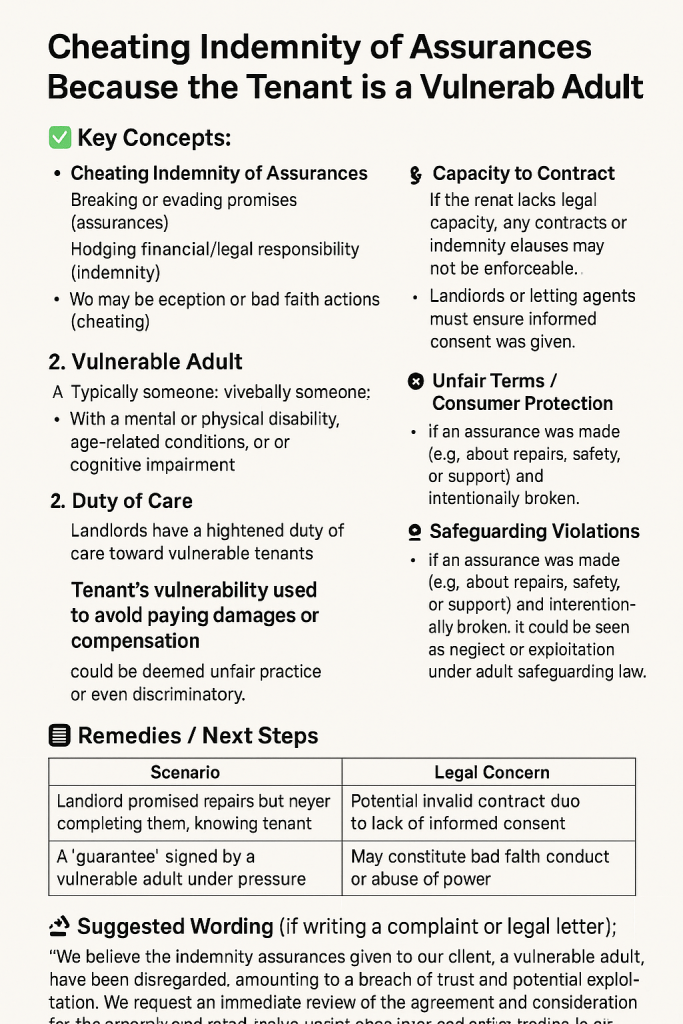
If you’re dealing with a situation where assurances or indemnities have been undermined due to the tenant being a vulnerable adult, here’s a breakdown of what might be happening and what to consider legally and ethically:
⸻
✅ Key Concepts:
- Cheating Indemnity of Assurances
This phrase likely refers to:
• Breaking or evading promises (assurances)
• Dodging financial/legal responsibility (indemnity)
• Potential deception or bad faith actions (cheating)
- Vulnerable Adult
A vulnerable adult is typically someone:
• With a mental or physical disability, age-related conditions, or cognitive impairment
• Who may be unable to fully understand, consent to, or enforce contractual terms
⸻
⚖️ Legal & Ethical Concerns
🔹 Capacity to Contract
• If the tenant lacks legal capacity, any contracts or indemnity clauses may not be enforceable.
• Landlords or letting agents must ensure informed consent was given.
🔹 Duty of Care
• Landlords have a heightened duty of care toward vulnerable tenants.
• Evading responsibilities by exploiting a tenant’s vulnerability could be deemed unfair practice or even discriminatory.
🔹 Unfair Terms / Consumer Protection
• Under the Consumer Rights Act 2015 (UK) or similar consumer legislation elsewhere, terms that are:
• Not transparent,
• Imposed without understanding,
• Or exploit vulnerability
…could be unfair and unenforceable.
🔹 Safeguarding Violations
• If an assurance was made (e.g. about repairs, safety, or support) and was intentionally broken, it could be seen as neglect or exploitation under adult safeguarding law.
📋 Example Situations
Scenario
Legal Concern
Landlord promised repairs but never completed them, knowing tenant has dementia
Potential neglect or breach of tenancy obligations
A “guarantee” was signed by a vulnerable adult under pressure
Potential invalid contract due to lack of informed consent
Tenant’s vulnerability is used to avoid paying damages or compensation
May constitute bad faith conduct or abuse of power
🛠️ Remedies / Next Steps
1. Safeguarding Referral
• If exploitation or abuse is suspected, report to Adult Social Services or a safeguarding board.
2. Legal Advice
• Consult a solicitor or advocacy service—especially one specializing in housing law or mental capacity law.
3. Ombudsman / Housing Regulator
• If it’s a housing association or social landlord, file a complaint with the Housing Ombudsman.
4. Mental Capacity Assessment
• If capacity is in question, seek a formal assessment via health or social care services.
5. Support via Advocacy
• Organizations like MIND, Age UK, or Shelter (UK) offer support for vulnerable tenants.
⸻
📘 Suggested Wording (if writing a complaint or legal letter):
“We believe the indemnity assurances given to our client, a vulnerable adult, have been disregarded, amounting to a breach of trust and potential exploitation. We request an immediate review of the agreement and consideration for the tenant’s protected status under consumer and safeguarding law.”

